
What Is ATX Crypto? A Beginner’s Guide to Project ATX (ATX)

 Prefer us on Google
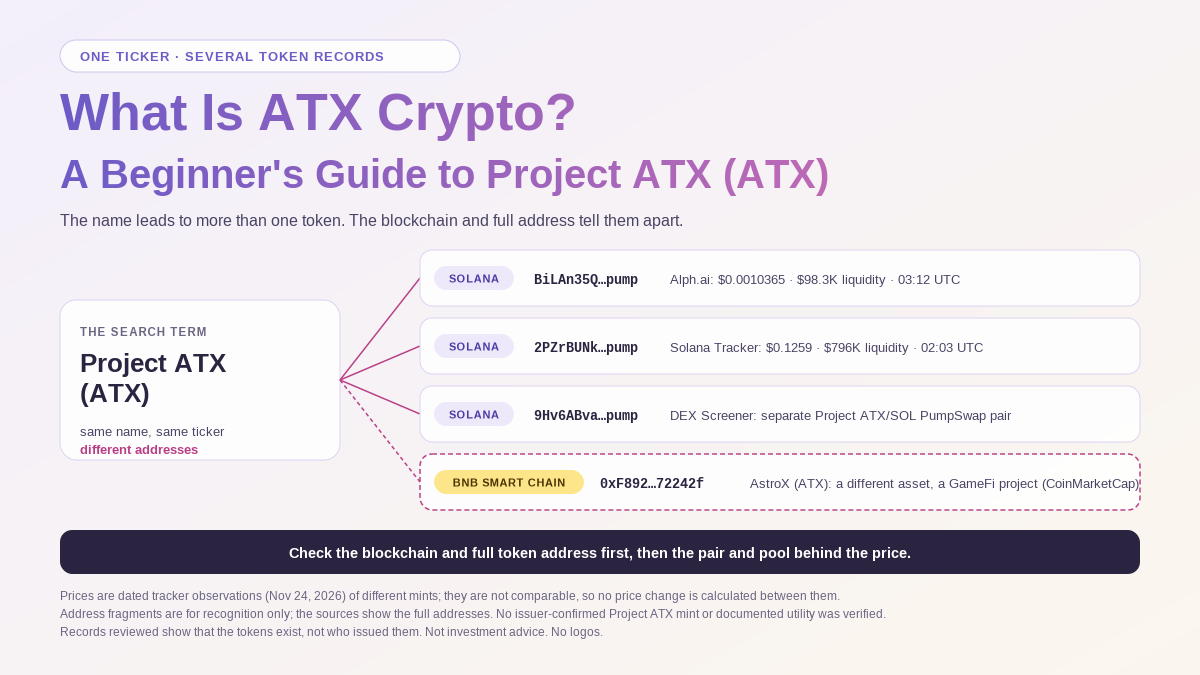
ATX crypto is a search term that can lead to multiple tokens. In recent Solana market results, Project ATX (ATX) appears as the display name of several token records with different mint addresses. The same ticker also leads to AstroX (ATX), a separate asset cataloged on BNB Smart Chain. To identify the token behind any ATX result, check the blockchain and full token address first. Then use the trading pair and pool to determine which market produced the price you see.
The clearest clue is that two market pages can agree on the name and ticker while describing different assets. On November 24, one tracker displayed a Project ATX token near $0.001 and another displayed a same-name token near $0.126. The mint addresses differed, and the observations were taken at different times. For a beginner, the most useful question is “Which asset does this page track?” Answer that before interpreting the chart, the market cap, or anything the project name seems to promise.
Author: WEEX SEO Team
Published: November 24, 2026
Updated: November 24, 2026
Data Cutoff: November 24, 2026, 07:35 UTC
Quick Answer
- Project ATX (ATX) is a display name and ticker found on multiple Solana token records.
- Each Solana mint address identifies a specific token. Its trading pool has a separate address.
- AstroX also uses
ATXand has a distinct BNB Smart Chain contract. - The records reviewed establish that the tokens exist. An issuer-confirmed Project ATX mint and documented utility remain unverified.
What Does Project ATX (ATX) Refer To?
Project ATX (ATX) is the name shown on several token and market pages. The search term ATX crypto gives you the label people use to find those pages. On Solana, the mint account gives you the identifier you need to determine which token a page actually describes. Solana documentation defines the mint as the account that uniquely identifies a token and stores information such as its supply, decimals, and optional authorities. Wallets and trackers can display metadata such as a name, ticker, and image alongside it.
A Pump page shows one Project ATX mint beginning BiLAn35Q and links to a PumpSwap pool. Alph.ai uses the same full token address for its Project ATX market page. Those two records support a limited but useful conclusion. They identify the same Solana token, even if the displayed prices or liquidity come from different sources or snapshots. Solana Tracker also shows a Project ATX token beginning 2PZrBUNk. That address identifies a different mint. The common project name tells you how both tokens are labeled. Their addresses tell you which one each platform is tracking.
The reviewed material did not establish what ATX stands for in Project ATX or provide issuer documentation that ties a roadmap, team, or token-holder rights to one confirmed mint. A launchpad’s creator field can help trace an on-chain account. Establishing who controls that account and whether it represents an organization takes separate evidence. If you encounter a claim about governance, staking, revenue sharing, or access to a product, look for first-party documentation that names the exact address before attributing the claim to a token.
How Do the Name, Ticker, Mint and Trading Pair Fit Together?
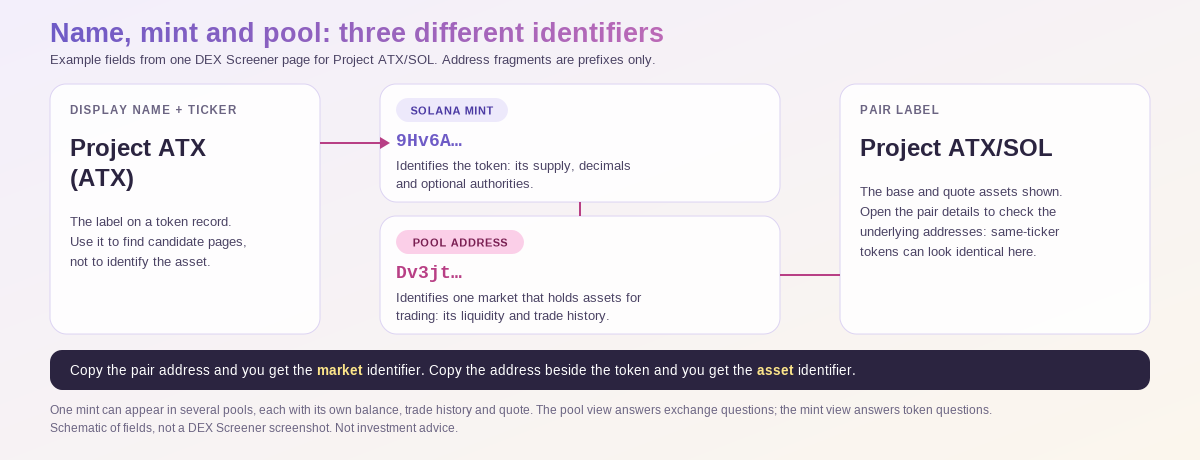
A token name helps people recognize a listing. A ticker is a short label that fits on a chart or trading screen. A mint address identifies the asset on Solana. A pool address identifies a particular market that holds assets for trading. A pair label shows which two assets are being exchanged, such as a token and SOL. The same token can appear in several pools, and different tokens can produce identical-looking pair labels if they share a ticker.
| Field | What it tells you | How to use it |
|---|---|---|
| Display name | The label attached to a token record | Use it to find candidate pages. |
| Ticker | The short symbol shown in an app or chart | Pair it with the full name and network. |
| Network and mint or contract address | Which on-chain token the page identifies | Match the full address across sources on the same network. |
| Pair label | The base and quote assets shown in a market | Open the pair details to check the underlying addresses. |
| Pool address | The specific market behind a DEX page | Use it to locate that pool’s liquidity and trade history. |
DEX Screener makes this distinction visible on one of the pages reviewed. Its Project ATX/SOL entry shows a pair address beginning Dv3jt and an ATX token mint beginning 9Hv6A. Copying the pair address gives you the market identifier. Copying the address beside the token gives you the asset identifier. This matters when moving between a chart and an explorer. The pool view answers questions about exchange activity, while the mint view answers questions about the token itself.
What Do the Same-Name Market Pages Actually Show?
The following records illustrate how quickly a ticker search can mix different assets. The market numbers are dated tracker observations, and the shortened addresses are shown for recognition only. Open the linked records to check their complete addresses. Each observation applies to the asset and market tracked by that page.
| Displayed asset | Network | Address fragment | What the source showed |
|---|---|---|---|
| Project ATX (ATX) | Solana | BiLAn35Q…pump | Alph.ai showed $0.0010365 and $98.3K in reported liquidity at 03:12 UTC on November 24. Pump shows the same mint. |
| Project ATX (ATX) | Solana | 2PZrBUNk…pump | Solana Tracker showed $0.1259 and $796K in reported liquidity at 02:03 UTC on November 24. |
| Project ATX (ATX) | Solana | 9Hv6ABva…pump | A DEX Screener snapshot identified this mint in a separate Project ATX/SOL PumpSwap pair. The page uses a changing live quote. |
| AstroX (ATX) | BNB Smart Chain | 0xF892…72242f | Coinbase and BitMart identify this contract as AstroX. CoinMarketCap describes AstroX as a GameFi project associated with a trading card game. |
The first two prices differ by roughly 121 times, but they belong to different mints and were recorded over an hour apart. Calculating a percentage change between them would create a price movement that neither page establishes. The same caveat applies to adding reported volume or averaging the displayed market caps. Those calculations would combine distinct assets under one name. A meaningful comparison starts with the same network and mint. Then you can ask whether the figures come from different pools, quote assets, observation times, or aggregation methods.
A Base result illustrates one other source of confusion. Dexonomics indexes a similarly named Project ATX listing on Base with a separate contract. The existence of that listing leaves open whether it has any relationship to a Solana token. A cross-chain claim needs evidence that connects the two deployments, such as issuer documentation naming both contracts. A similar name, logo, or website link does little to establish that connection on its own.
Why Are People Searching for Project ATX (ATX)?
The recent search activity brought readers into a market where the same name already appears across individual token and pool pages. The reviewed results show Project ATX entries on a launchpad, charting sites and trackers. They do not establish a public event or announcement that caused interest to rise. The link between a search spike and trading activity for any one mint remains uncertain.
Readers may arrive with very different questions. Someone searching what is ATX crypto may be trying to identify a name seen in a feed. Someone searching Project ATX price may want to reopen a particular chart. Someone who lands on AstroX may assume its project description applies to the Solana listings. Start with the context where you found the name. A link to an actual market, an explorer record, or a first-party announcement gives you more to check than a screenshot clipped to the ticker and price.
How to Verify a Project ATX (ATX) Token Address
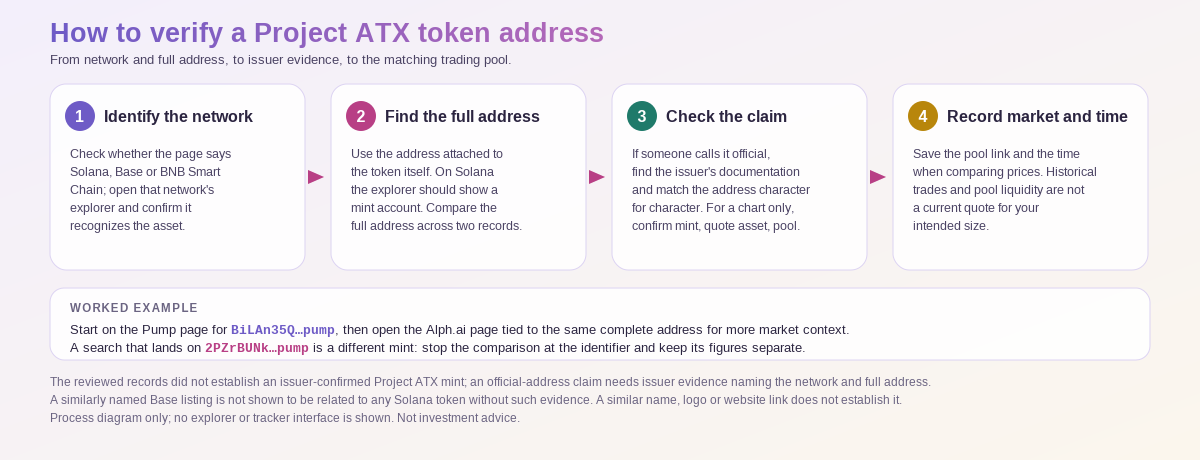
The verification starts with an address you can trace. If you are checking a chart or wallet result, use the steps below to identify the asset it displays. If you are checking an affiliation claim, you also need a reliable source that connects the address to the claimed issuer.
- Identify the network. Check whether the page says Solana, Base, or BNB Smart Chain. Open the explorer for that network and verify that it recognizes the asset.
- Find the full token address. On a pair page, locate the address attached to the token itself. On Solana, the explorer should identify it as a mint account. Compare the full address across two records.
- Check the claim you started with. If someone calls the asset official, find the issuer’s announcement or documentation and match the address character for character. If you are only checking a chart, confirm the mint, quote asset, and pool first.
- Record the market and timestamp. Save the pool link and time when comparing prices. For a sellability check, distinguish historical trades and pool liquidity from a current quote for your intended size.
Here is how the check works on the records above. If you begin on the Pump page for the BiLAn35Q…pump mint and open the Alph.ai page tied to that same complete address, you can use the second page for additional market context on that token. If a search sends you to the 2PZrBUNk…pump page, stop the comparison at the identifier. Its chart may be valid for the asset it tracks, and its figures belong in a separate record. For exchange availability, WEEX’s listing verification guide explains how to distinguish an informational page from an active market route.
WEEX Editorial View
Treat Project ATX coverage as address-specific until an identifiable issuer publishes a mint that readers can verify. Retail search results tend to put the displayed ticker and price front and center. In this case, the research question starts one level down, with the record that connects those figures to an actual asset. A reliable Project ATX explanation should give readers enough information to repeat that check before they use a price, infer a project affiliation, or follow a trading link.
FAQ
1. Is There One Official Project ATX Contract Address?
The reviewed sources show multiple Solana mints using the Project ATX name. They did not establish one issuer-confirmed address. A tracker can identify which token its chart follows. An official address claim requires evidence from the issuer that names the network and full address.
2. Is Project ATX the Same Token as AstroX?
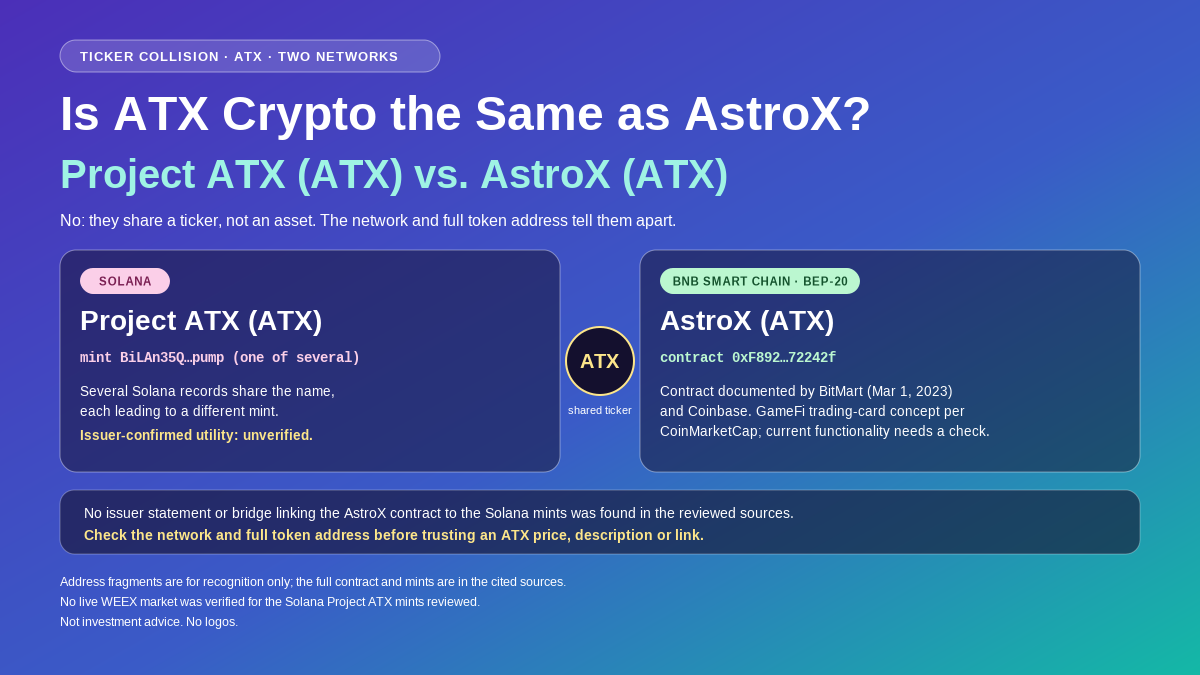
The Solana Project ATX records reviewed here use different addresses and a different network from the AstroX (ATX) contract identified on BNB Smart Chain. AstroX documentation or descriptions should be read in the context of that specific asset.
3. Can One Solana Token Have More Than One Trading Pool?
Yes. One Solana mint can be used in multiple pools. Matching mint addresses identify the same asset, while the pool addresses identify individual markets. Each market can have a different balance, trade history, and quote.
4. Can I Use a Market Cap to Identify the Right ATX Token?
Use the token address for identity. A tracker’s displayed market cap is a changing figure associated with the price and supply it uses for that record. Two same-ticker tokens may display very different caps, and market cap alone gives you little information about who issued either token or what a sale would return.
Sources
- Solana documentation, Create a Token Mint, accessed November 24, 2026.
- Pump, Project ATX token and PumpSwap pool record for
BiLAn35Q…pump, accessed November 24, 2026. - Alph.ai and Solana Tracker, Project ATX token records with observations at 03:12 and 02:03 UTC, respectively, November 24, 2026.
- DEX Screener, Project ATX/SOL PumpSwap pair, accessed November 24, 2026.
- Coinbase, BitMart and CoinMarketCap, AstroX asset and contract references, accessed November 24, 2026.
This content is provided for general informational purposes only and doesn't constitute financial, investment, legal, or tax advice. Any events, rewards, online promotions, or related information mentioned herein should not be considered a recommendation, solicitation, or invitation to purchase, sell, trade, or otherwise deal in any crypto assets. Crypto assets are highly volatile and may result in loss. The availability of WEEX services, products, and related events may vary by region. You are responsible for ensuring that your participation is in accordance with applicable local laws and regulations.
You may also like
Is ATX Crypto the Same as AstroX? Project ATX (ATX) vs. AstroX (ATX)
Compare Project ATX on Solana with AstroX on BNB Smart Chain. Learn how to verify each token address before trusting an ATX price or buying guide.
Binance Hack Recovery: UAE Court Orders Freeze on Stolen Crypto
A UAE court ordered firms to keep crypto linked to the $6.3 billion Binance hack frozen. Read what the order covers and when the next hearing is scheduled.

Zaif Hack: How $60 Million in Crypto Was Stolen in 2018
Japan’s Zaif exchange lost about $60 million in cryptocurrency in a 2018 hack. Read what happened and which assets were stolen.
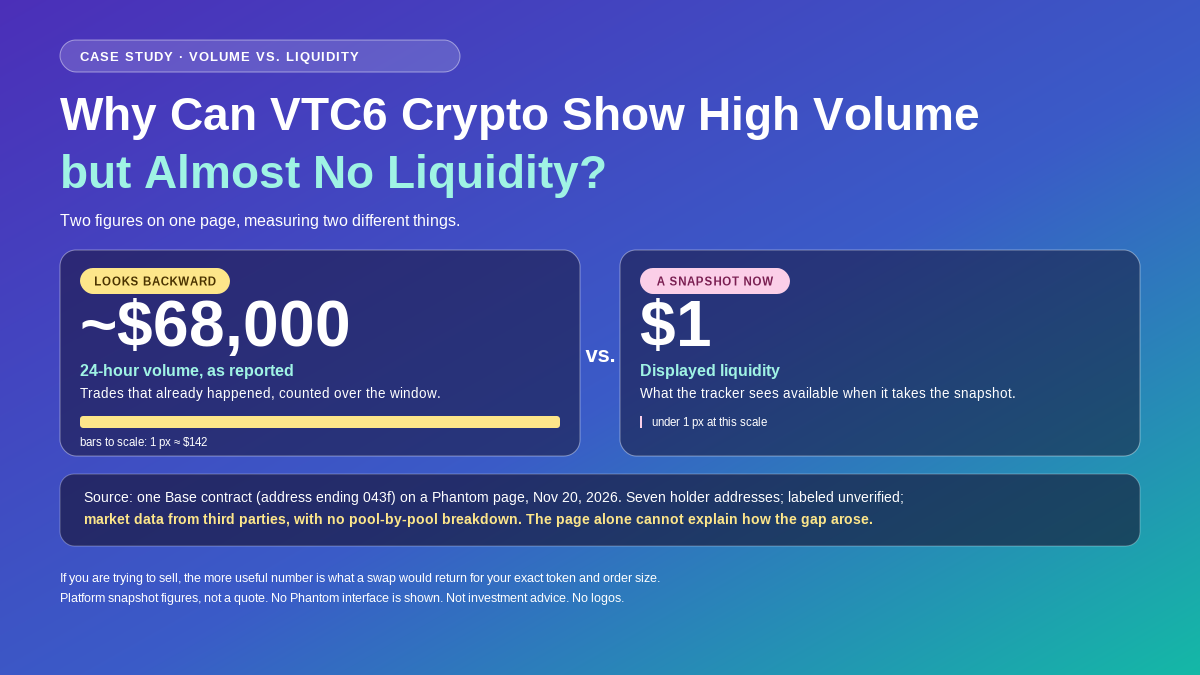
Why Can VTC6 Crypto Show High Volume but Almost No Liquidity?
Why can VTC6 crypto show $68K in volume and just $1 in liquidity? Learn what pool reserves, price impact and sell quotes reveal about a possible exit.
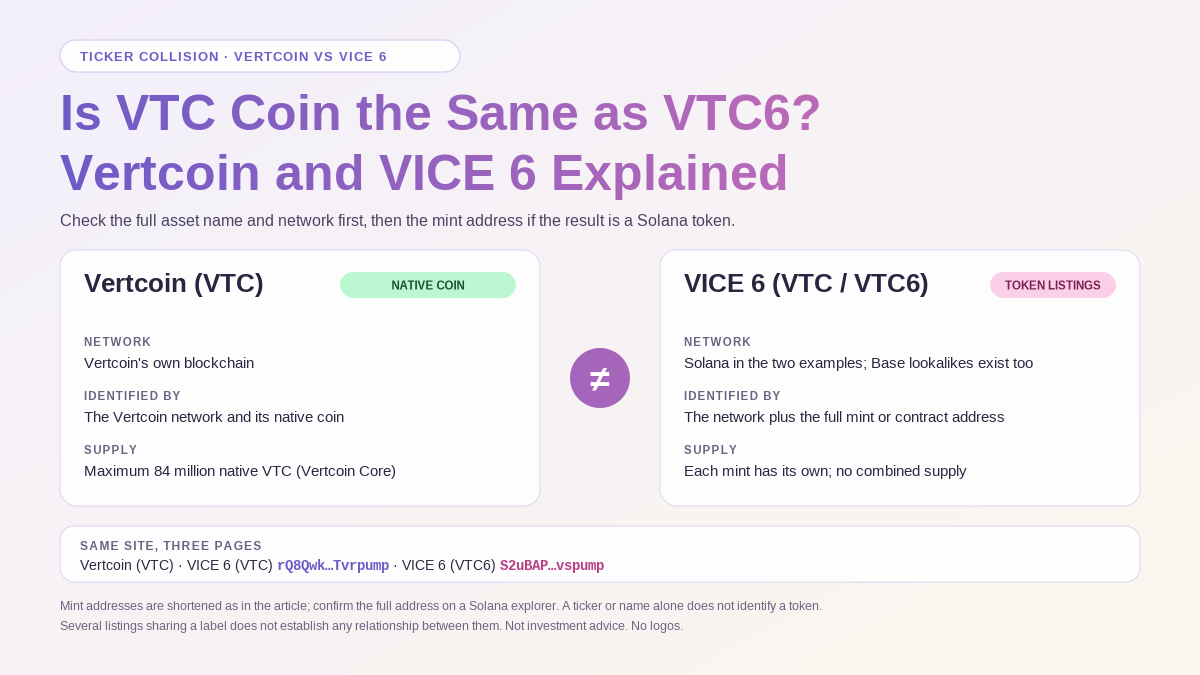
Is VTC Coin the Same as VTC6? Vertcoin and VICE 6 Explained
Is VTC coin the same as VTC6? Compare Vertcoin and VICE 6 by network, ticker and token address, and learn which details to check before transferring funds.
What Is VTC6 Crypto? A Beginner’s Guide to VICE 6 (VTC6)
What is VTC6 crypto? Learn why several tokens use the VICE 6 name and how to check the network, mint address and trading pool before comparing listings.
How to Buy VTC6 Crypto: A Guide to VICE 6 (VTC6)
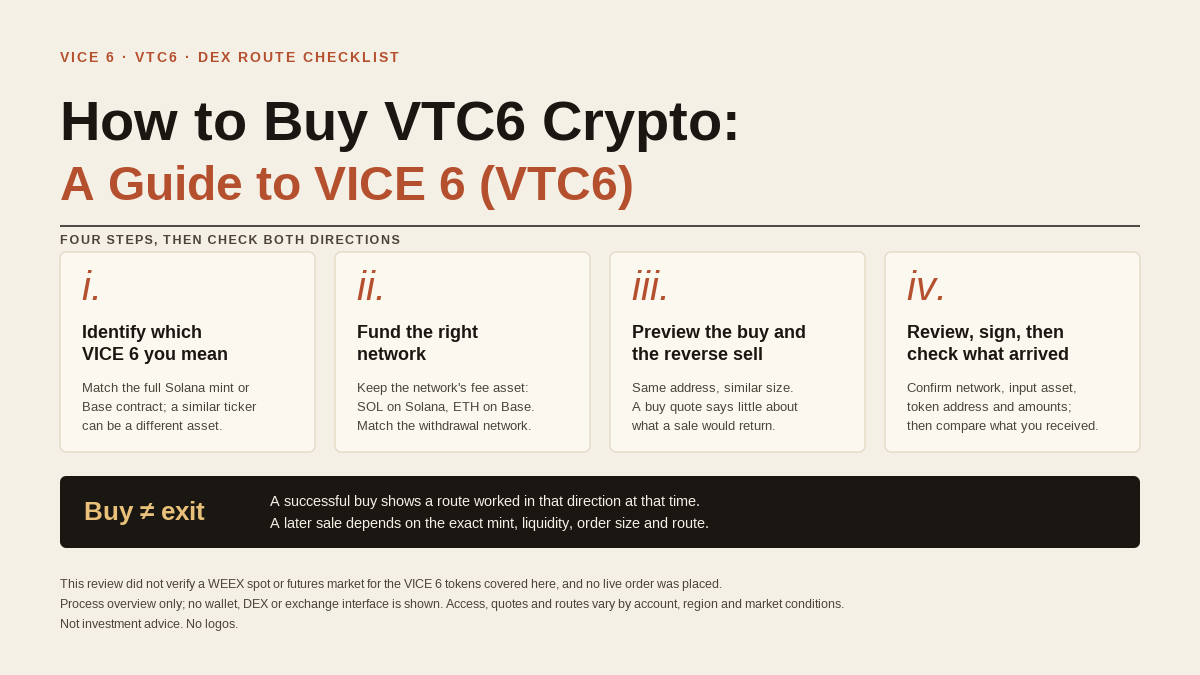
Learn how to buy VTC6 crypto through a supported DEX route, verify the exact VICE 6 token address, and review buy and sell quotes before you swap.
VTC6 Crypto: Is It the Official GTA 6 Coin? What Take-Two Actually Proposed
Is VTC6 crypto the official GTA 6 coin? Compare Take-Two’s Sharkbux proposal, Rockstar’s release information and two same-name Solana token mints.
How to Buy USDT With a Credit Card: Fees, Networks, and Failed Payments
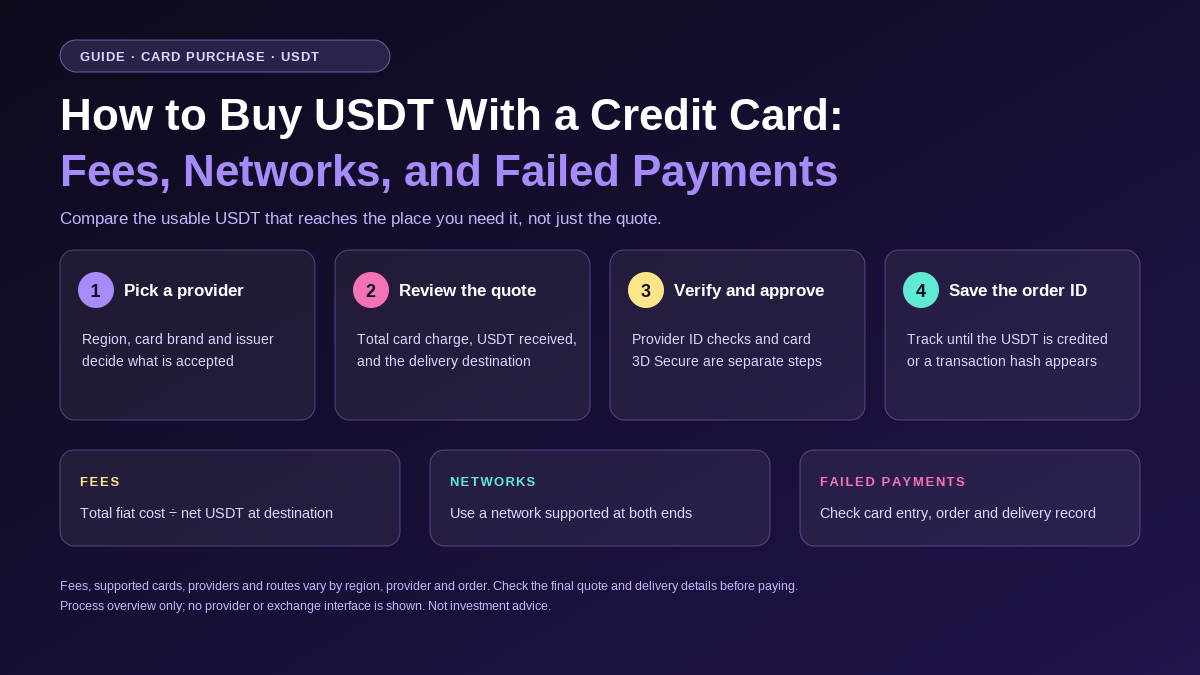
Learn how to buy USDT with a credit or debit card, compare the total cost, pick the right network, and troubleshoot declined payments or missing USDT.
Shiba Inu (SHIB) Price Prediction 2027: What Would It Take to Reach $0.00001?
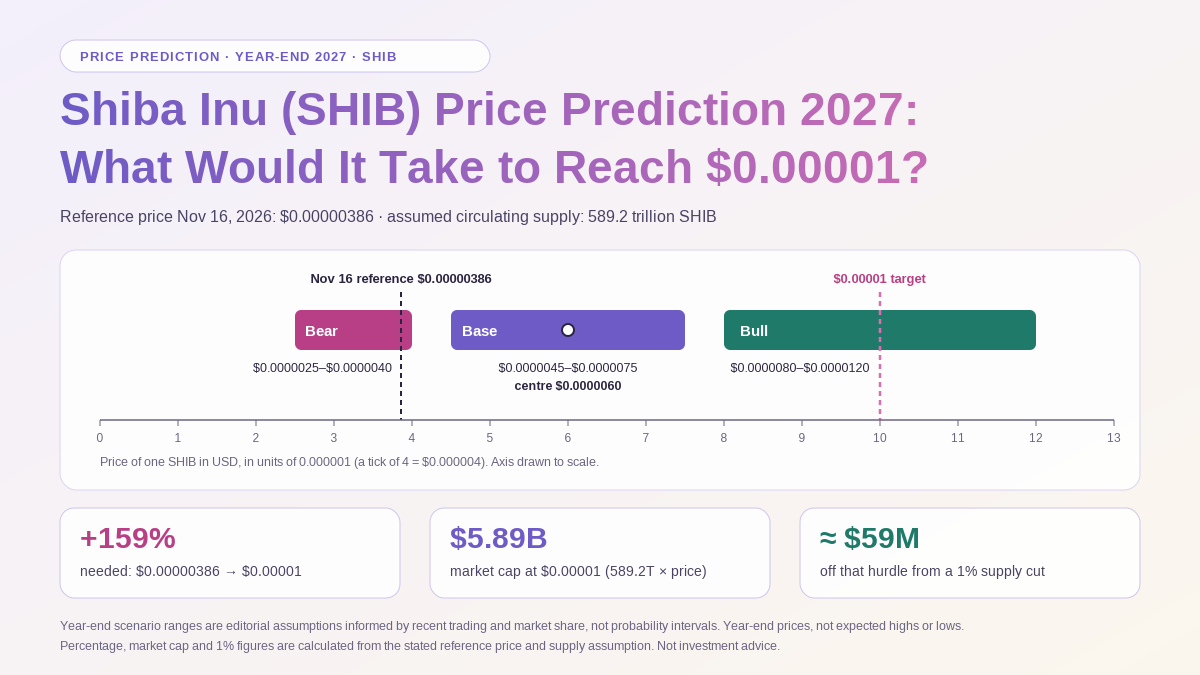
See our Shiba Inu price prediction for 2027, including the $0.000006 base estimate, the market cap needed for $0.00001, and how much burns could help.
Mercado Bitcoin Withdrawal Update: Pix Restart and Crypto Suspension
Mercado Bitcoin set November 17 for Pix deposits and withdrawals in Brazilian reais. Read the withdrawal rules and the background to the crypto suspension.
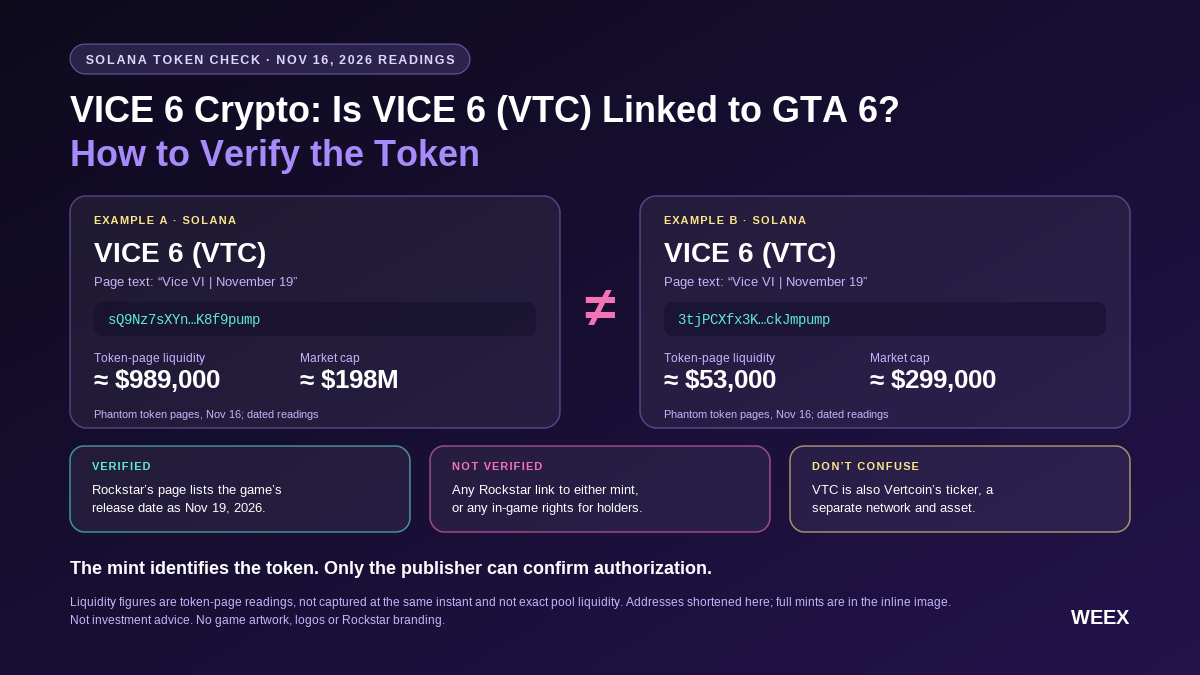
VICE 6 Crypto: Is VICE 6 (VTC) Linked to GTA 6? How to Verify the Token
Is VICE 6 crypto linked to GTA 6? Compare two Solana tokens using VTC, verify their mint and pool addresses, and see what Rockstar has confirmed.
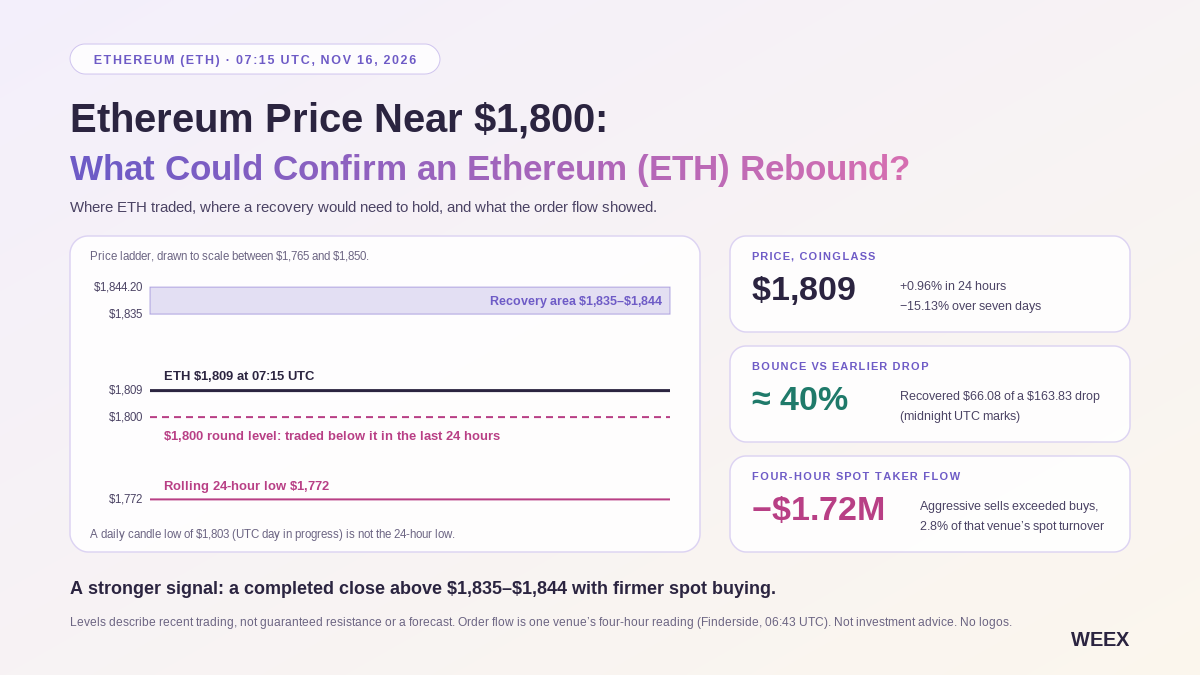
Ethereum Price Near $1,800: What Could Confirm an Ethereum (ETH) Rebound?
Ethereum traded near $1,800 on November 16. See what four-hour spot order flow, futures positioning, and Friday’s ETF flows say about an ETH rebound.
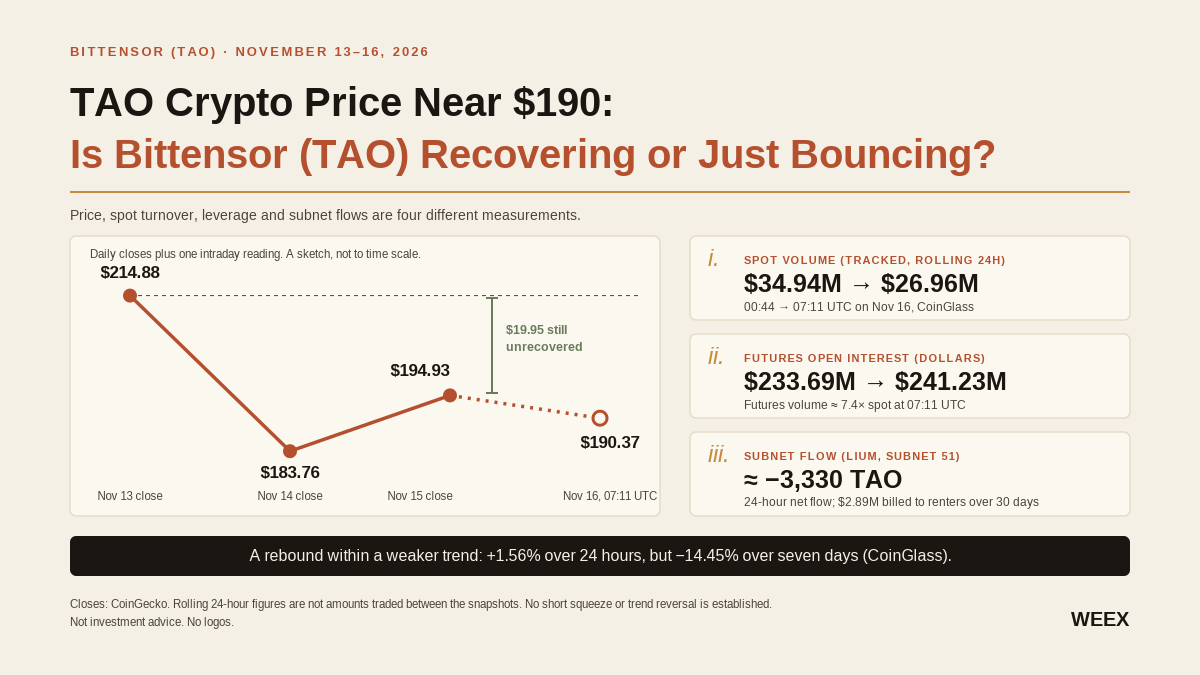
TAO Crypto Price Near $190: Is Bittensor (TAO) Recovering or Just Bouncing?
TAO bounced near $190. Compare spot volume, futures positioning, and Bittensor subnet flows to see what would confirm a more durable recovery.
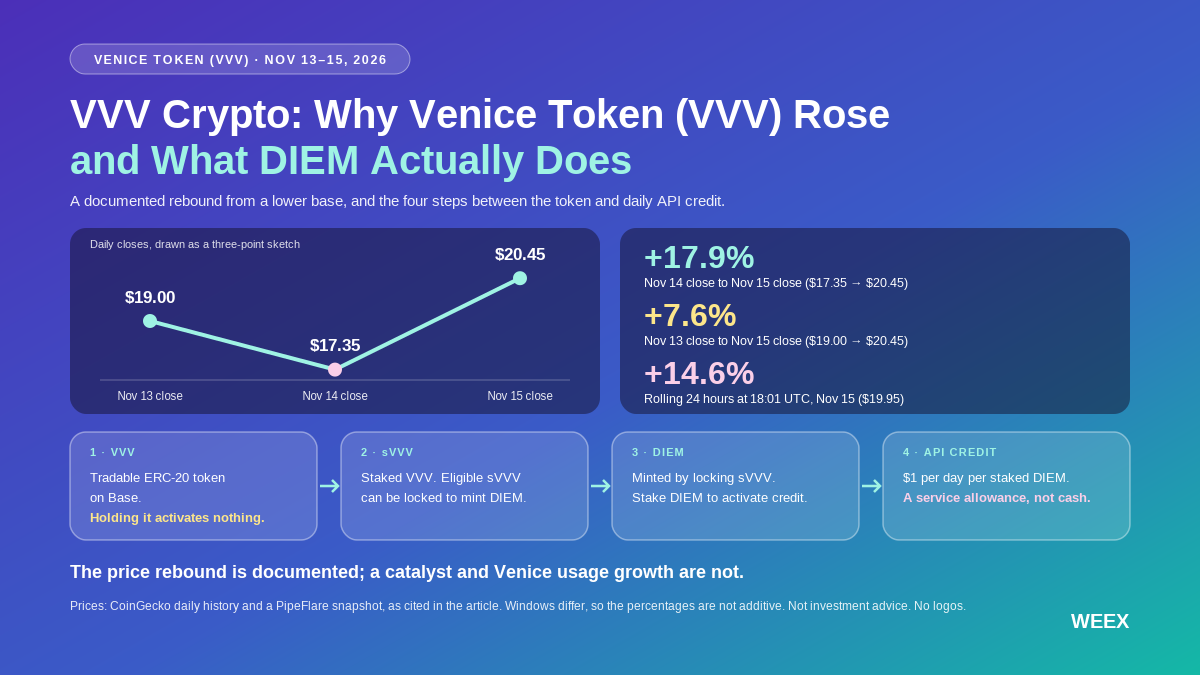
VVV Crypto: What Is Venice Token, Why Venice Token (VVV) Rose and What DIEM Actually Does
Venice Token rose about 14.6% in one November 15 snapshot. Learn what the data shows, how VVV staking works, and what DIEM’s daily API credit buys.
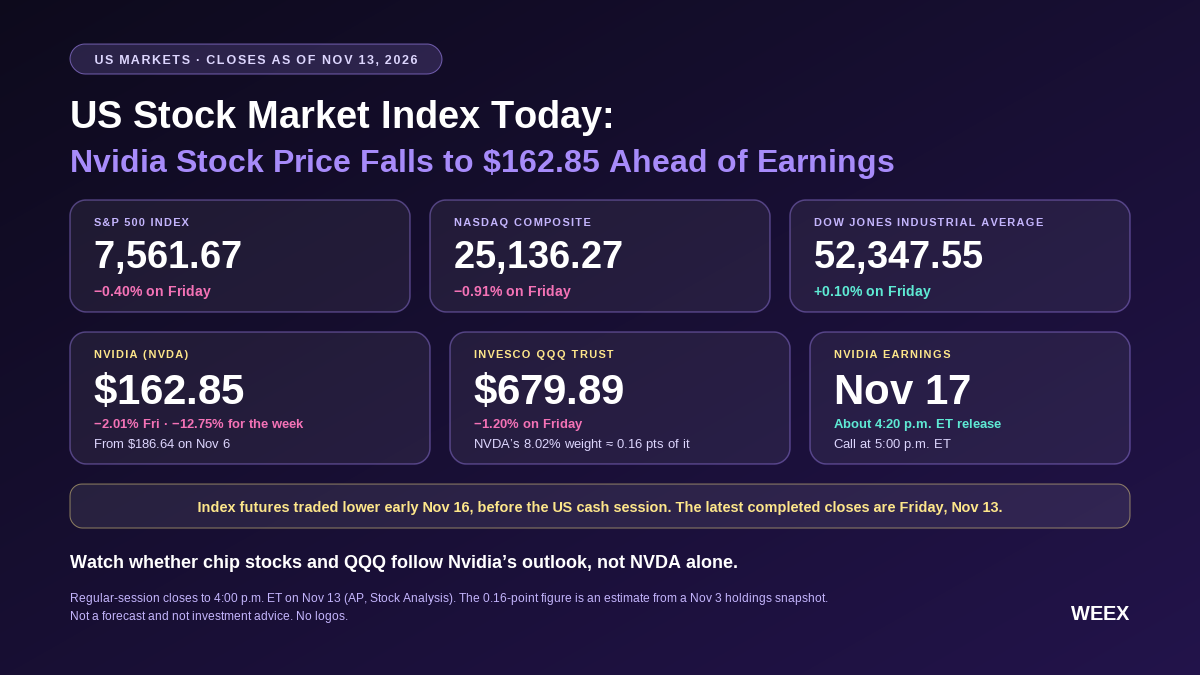
US Stock Market Index Today: Nvidia Stock Price Falls to $162.85 Ahead of Earnings(S&P 500 and QQQ )
Track US stock index futures, the S&P 500 and Dow, and see how Nvidia’s $162.85 close and November 17 earnings could shape QQQ and the broader market.
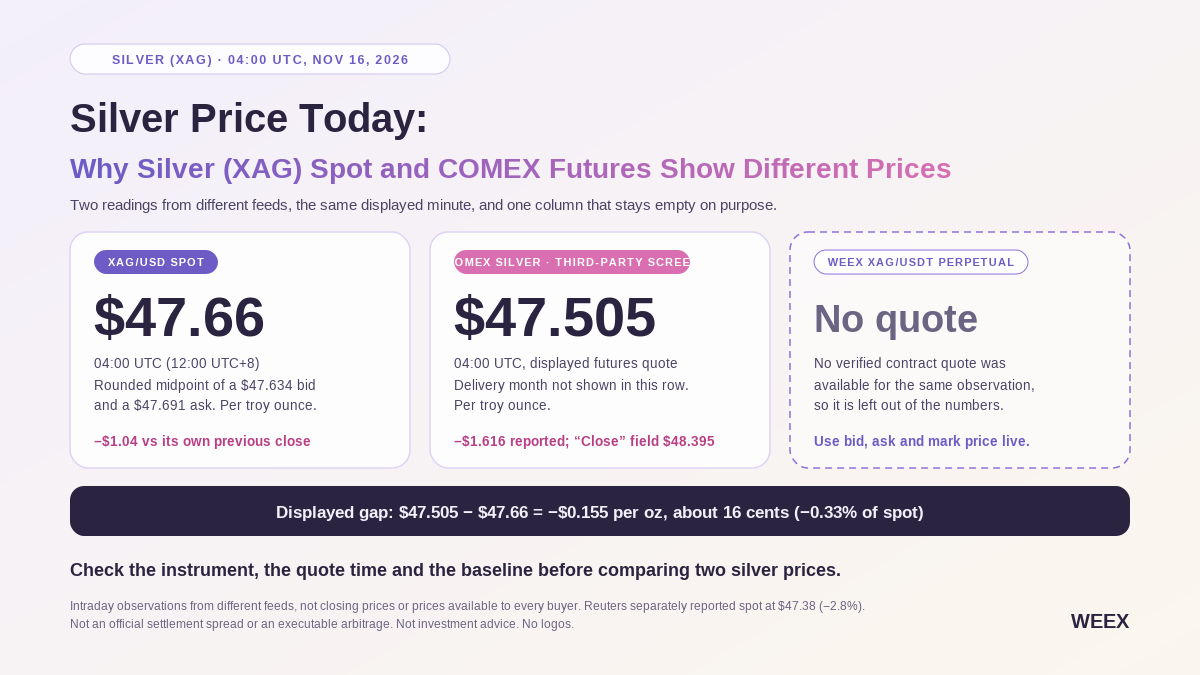
Silver Price Today: Why Silver (XAG) Spot and COMEX Futures Show Different Prices
Silver traded near $47–$48 on November 16. Compare XAG/USD spot, COMEX silver futures, and XAG/USDT perpetuals, and learn why their prices differ.
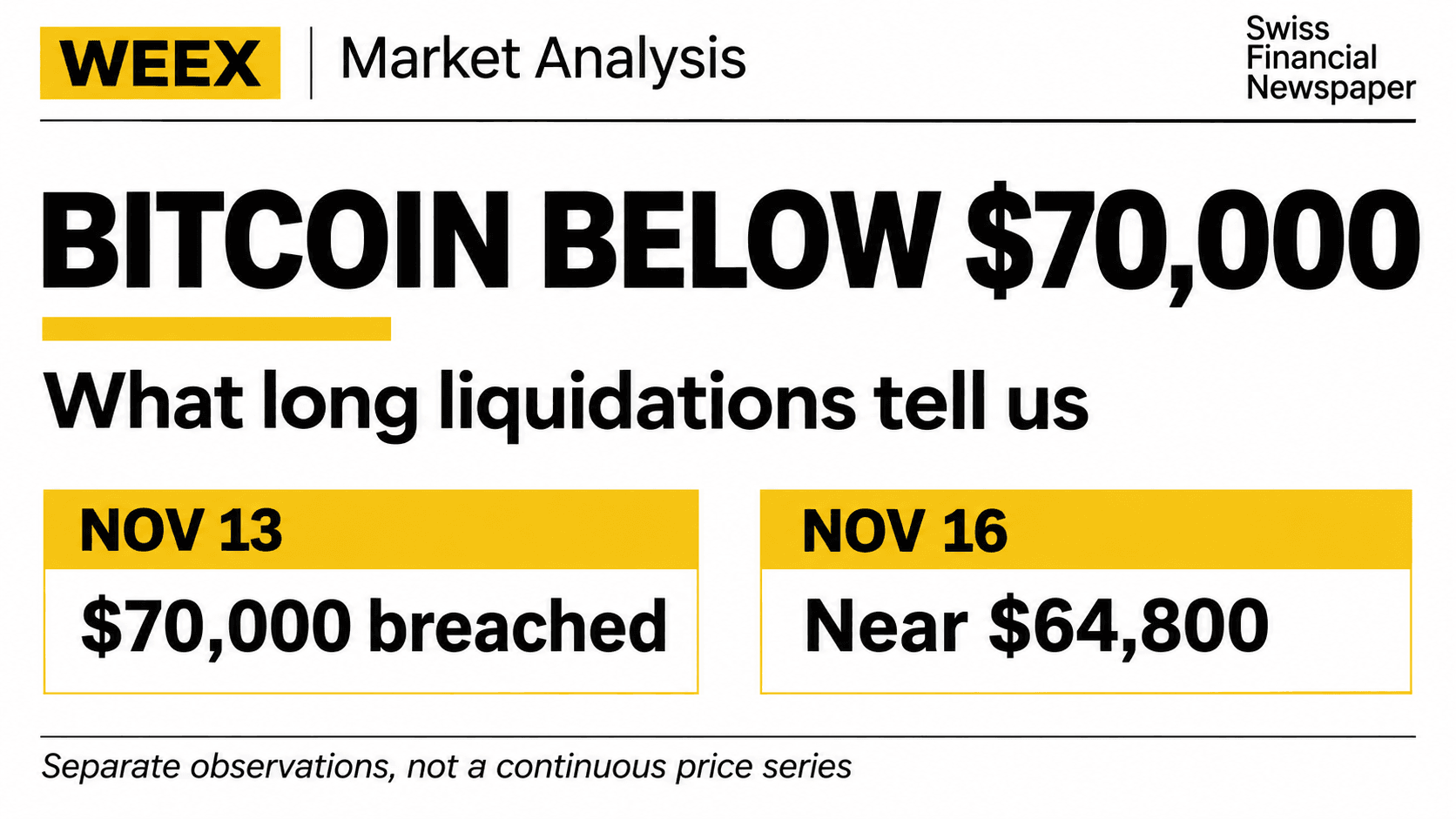
Why Did Bitcoin (BTC) Drop Below $70,000? What Long Liquidations Tell Us
See why Bitcoin fell below $70,000 on November 13, how long liquidations amplified the decline, and what to watch before calling a rebound. If you already plan to trade, you can check whether your activity qualifies for the WEEX Lucky Eggs event, scheduled to run through November 25, 2026 (UTC+8).
Binance Hack Exposes Cybersecurity Gaps at Crypto Exchanges
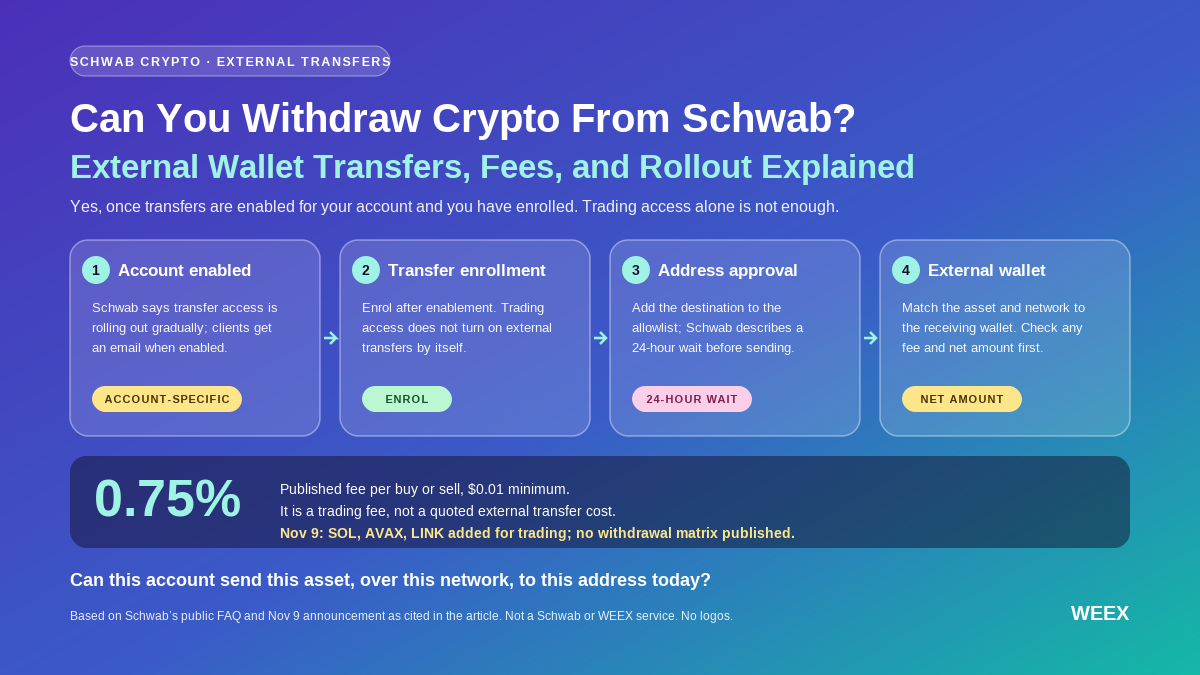
Can You Withdraw Crypto From Schwab? External Wallet Transfers, Fees, and Rollout Explained
Find out when Schwab Crypto allows external wallet withdrawals, how the 24-hour address wait works, and why the 0.75% trading fee is separate.
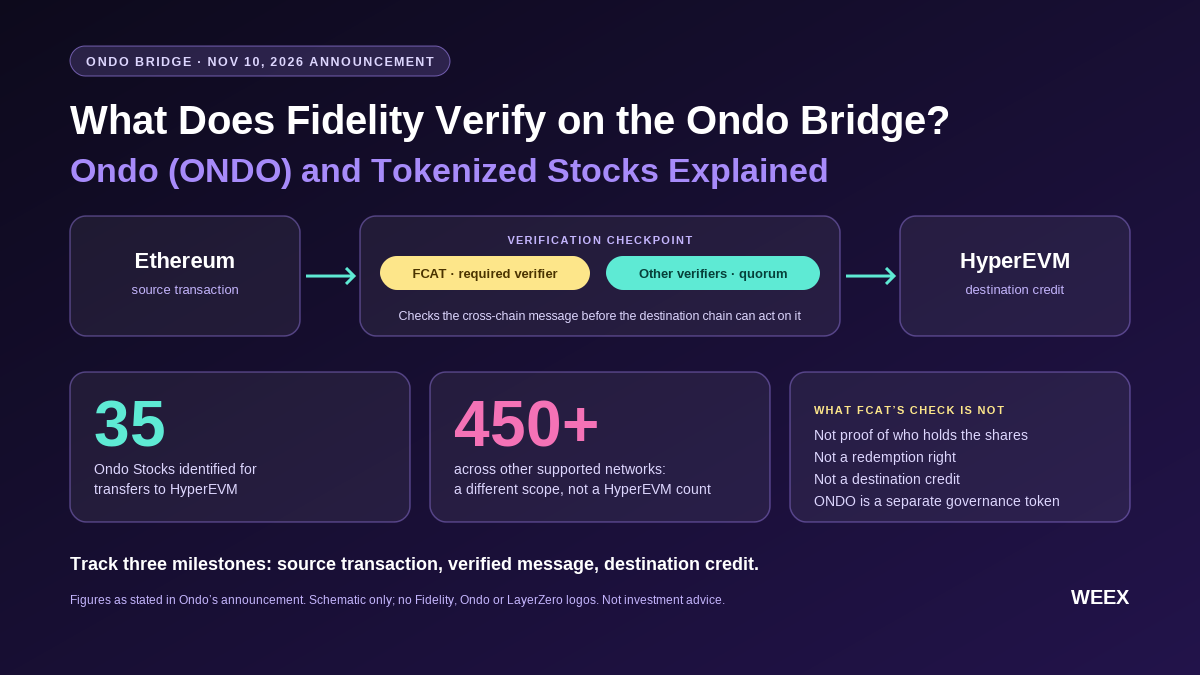
What Does Fidelity Verify on the Ondo Bridge? Ondo (ONDO) and Tokenized Stocks Explained
Learn what Fidelity’s FCAT verifies on the Ondo Bridge, how to check a tokenized stock transfer, and why Ondo Stocks differ from the ONDO token.
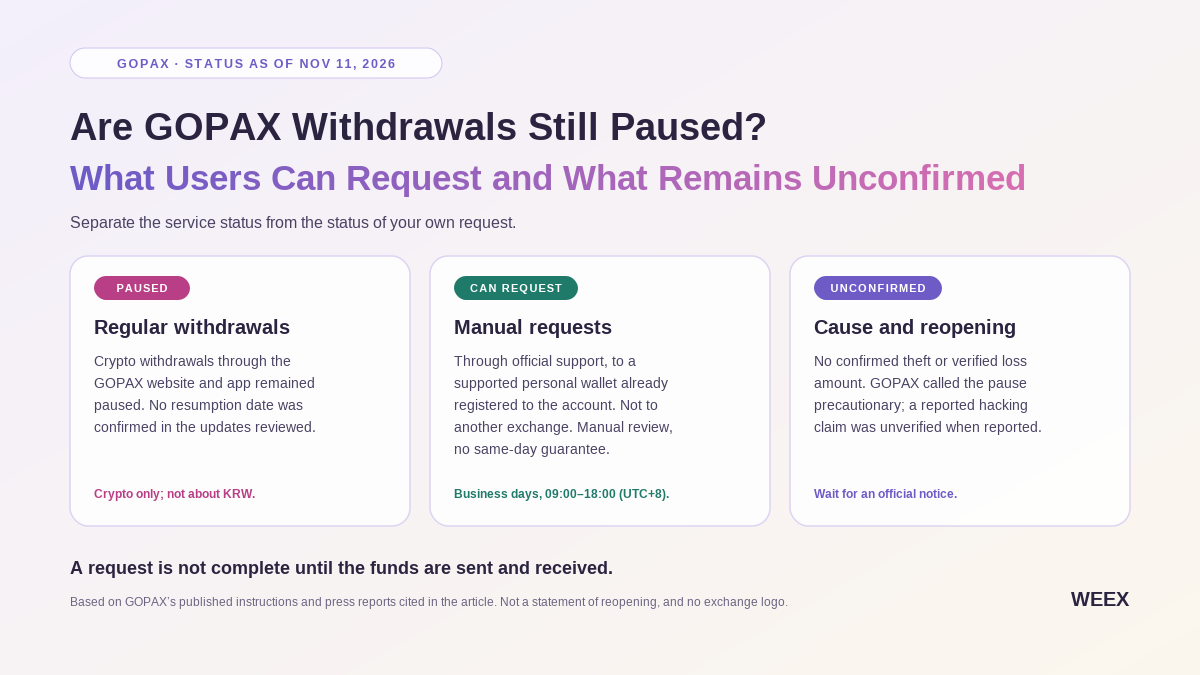
Are GOPAX Withdrawals Still Paused? What Users Can Request and What Remains Unconfirmed
Check the latest GOPAX withdrawal status, which wallets qualify for manual requests, and how to tell whether your crypto withdrawal has been sent.
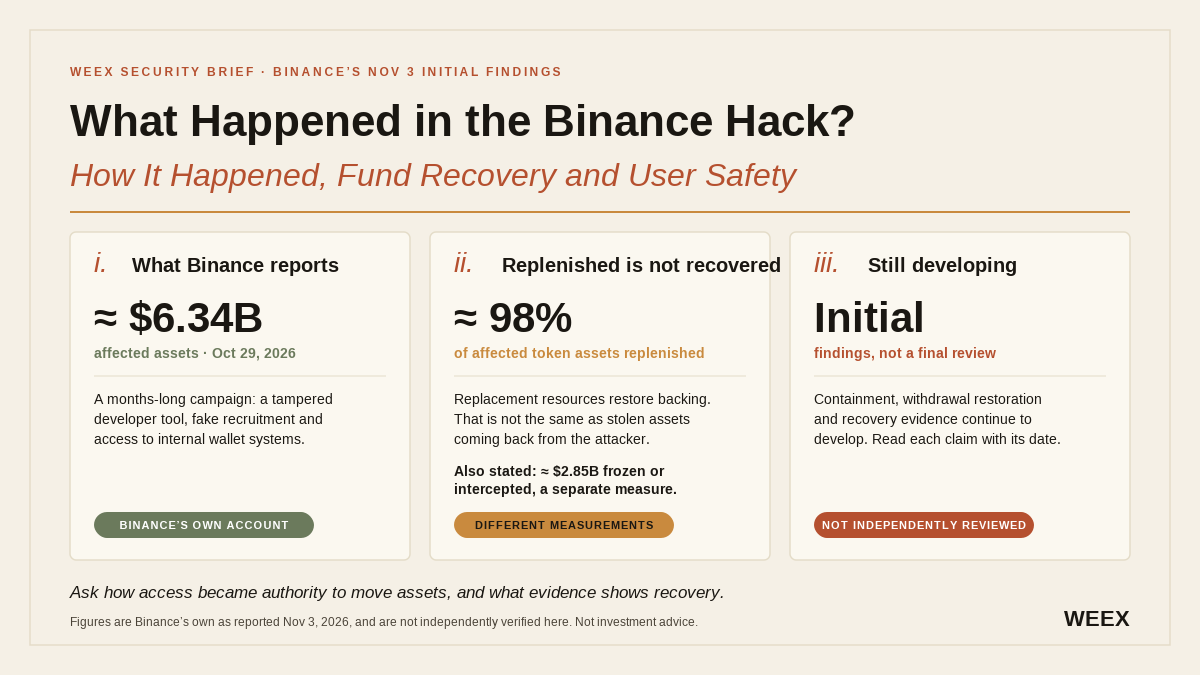
What Happened in the Binance Hack? How It Happened, Fund Recovery and User Safety
What happened in the Binance hack? Review the attack timeline, latest fund replenishment, recovery limits and practical steps to protect your account.
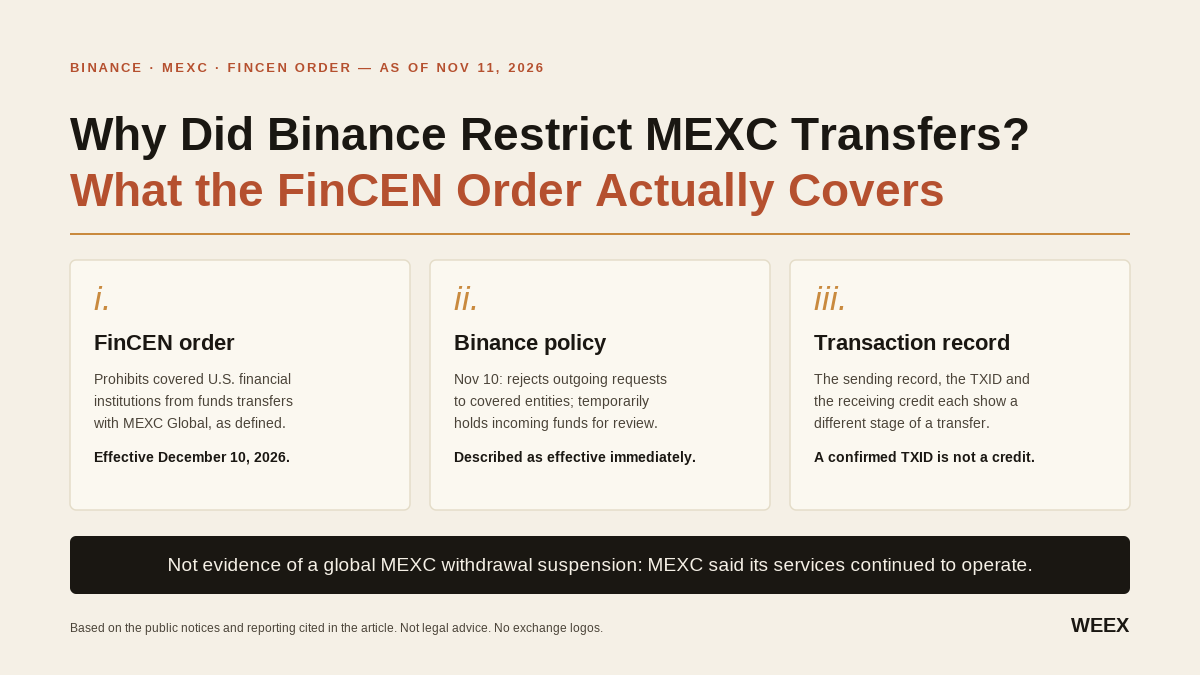
Why Did Binance Restrict MEXC Transfers? What the FinCEN Order Actually Covers
Find out why Binance restricted MEXC transfers, when the FinCEN order takes effect, and what to check if your crypto deposit is held for review.

What Is Elysium Crypto? The Hyperliquid Layer 2, Gas Fees, and Token Confusion Explained
Learn what Elysium is, why it uses HYPE for gas, how KNTQ buybacks are designed, and how to distinguish bridge TVL from actual DeFi activity.
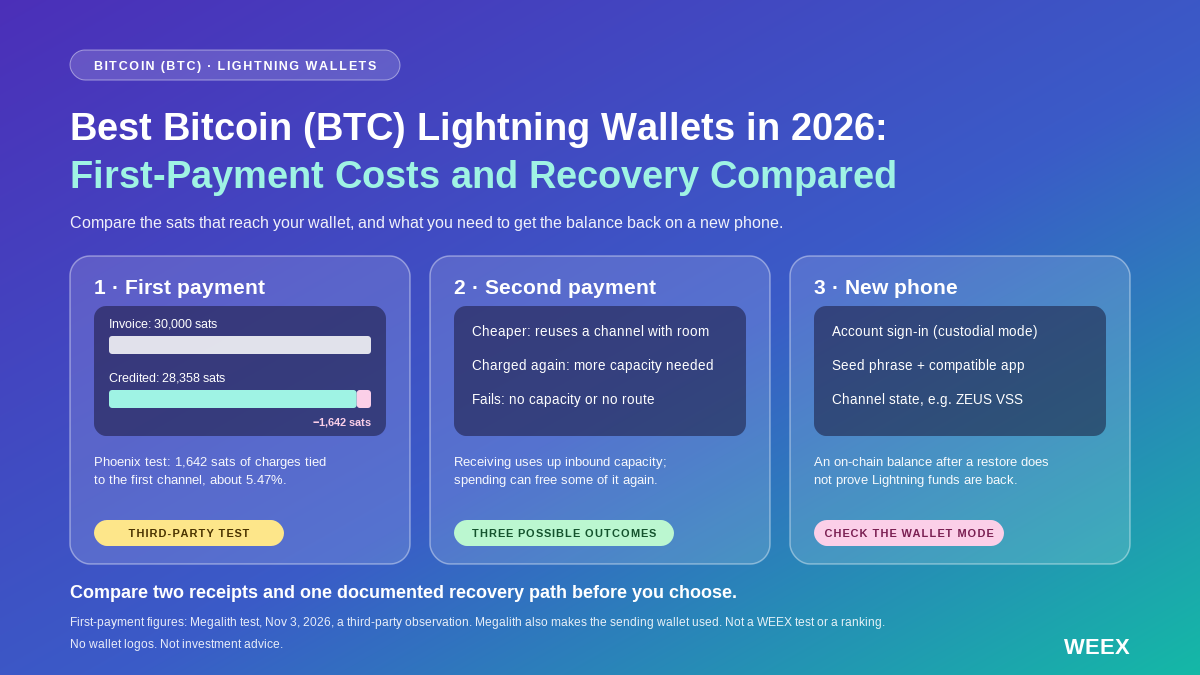
Best Bitcoin (BTC) Lightning Wallets in 2026: First-Payment Costs and Recovery Compared
Key Takeaways Lightning Network wallets enable fast and cost-effective Bitcoin transactions by using off-chain channels. A variety of…
Crypto ATM Fees: How Much Bitcoin (BTC) Do You Get for $100?
See how much Bitcoin $100 buys at a crypto ATM. Compare two sample quotes, calculate the all-in cost, and learn which fees not to count twice.
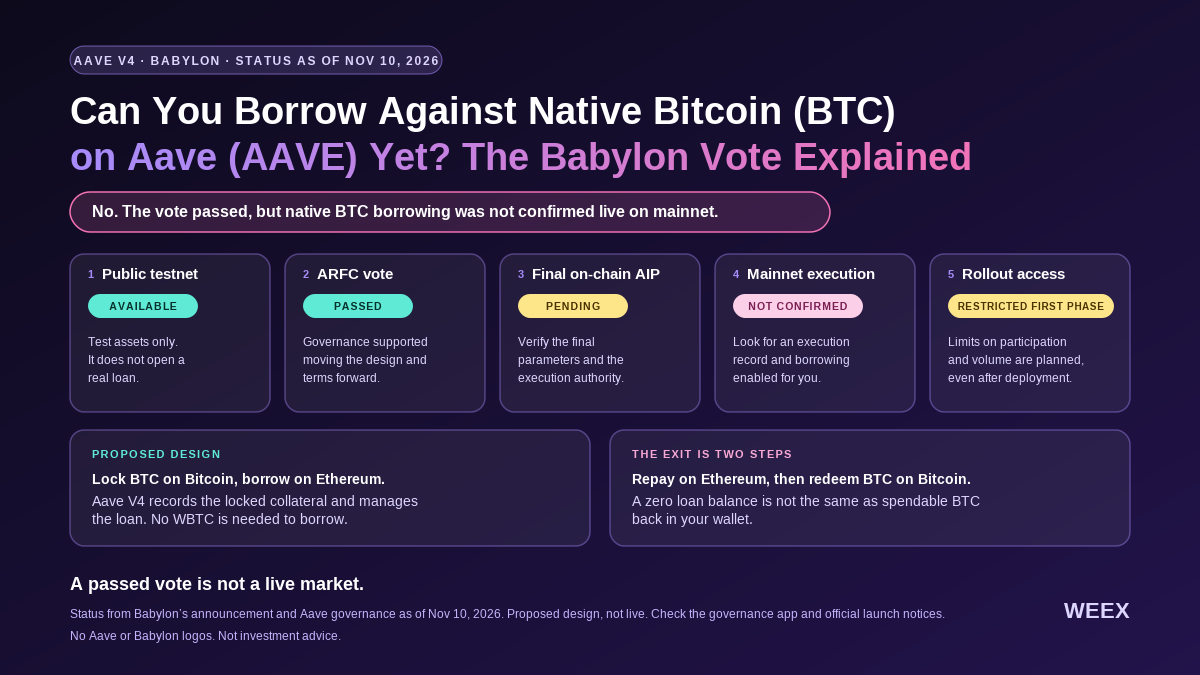
Can You Borrow Against Native Bitcoin (BTC) on Aave (AAVE) Yet? The Babylon Vote Explained
Can you borrow against native Bitcoin on Aave yet? See what the Babylon vote approved, what still needs to launch, and how BTC liquidation would work.
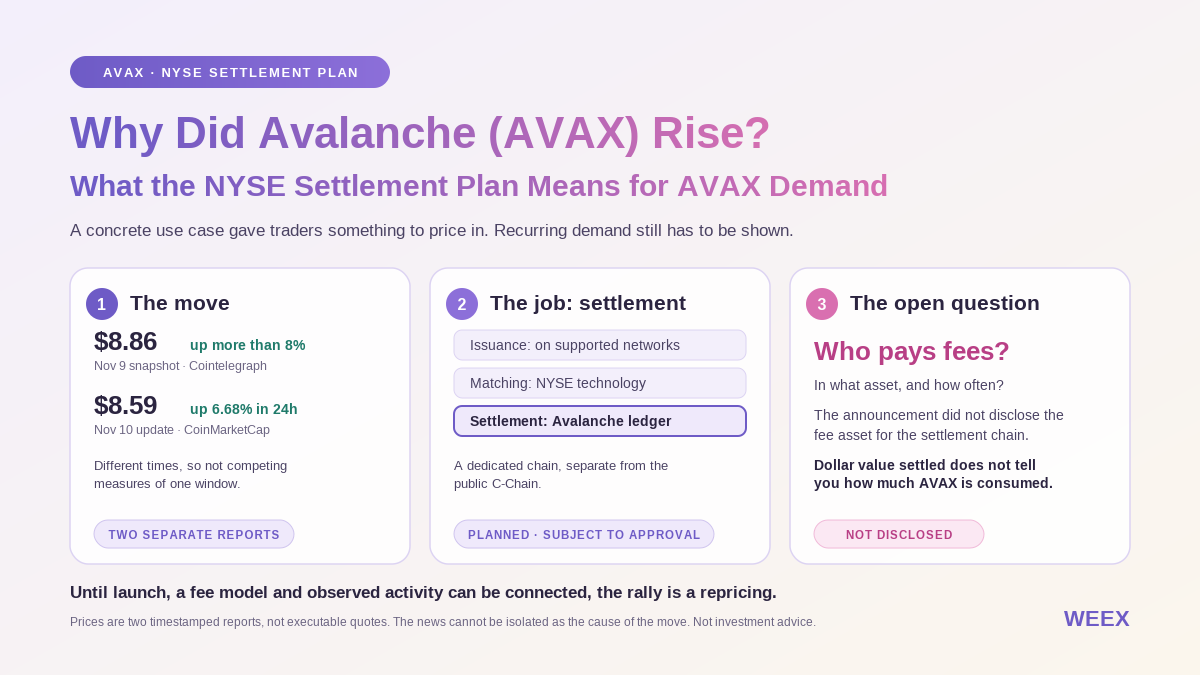
Why Did Avalanche (AVAX) Rise? What the NYSE Settlement Plan Means for AVAX Demand
See why Avalanche (AVAX) rallied after the NYSE settlement announcement, how the dedicated chain would work, and what could create demand for AVAX.

Zcash (ZEC) Price Up 7% in 24 Hours: Trading Volume, Market Context and What to Verify
ZEC rose roughly 5% to 7% to about $1,295 to $1,320 on November 5, 2026, on about $1.2 billion in 24-hour volume, but no source confirms why. The NU7 upgrade, which cuts block time from 75 to 25 seconds, is due around November 5 to 6 and is unconfirmed.
Is ATX Crypto the Same as AstroX? Project ATX (ATX) vs. AstroX (ATX)
Compare Project ATX on Solana with AstroX on BNB Smart Chain. Learn how to verify each token address before trusting an ATX price or buying guide.
Binance Hack Recovery: UAE Court Orders Freeze on Stolen Crypto
A UAE court ordered firms to keep crypto linked to the $6.3 billion Binance hack frozen. Read what the order covers and when the next hearing is scheduled.
Zaif Hack: How $60 Million in Crypto Was Stolen in 2018
Japan’s Zaif exchange lost about $60 million in cryptocurrency in a 2018 hack. Read what happened and which assets were stolen.
Why Can VTC6 Crypto Show High Volume but Almost No Liquidity?
Why can VTC6 crypto show $68K in volume and just $1 in liquidity? Learn what pool reserves, price impact and sell quotes reveal about a possible exit.
Is VTC Coin the Same as VTC6? Vertcoin and VICE 6 Explained
Is VTC coin the same as VTC6? Compare Vertcoin and VICE 6 by network, ticker and token address, and learn which details to check before transferring funds.
What Is VTC6 Crypto? A Beginner’s Guide to VICE 6 (VTC6)
What is VTC6 crypto? Learn why several tokens use the VICE 6 name and how to check the network, mint address and trading pool before comparing listings.
Latest articles
Latest coin listings on WEEX


