
CFTC, DOJ sue Arkansas to stop Kalshi gambling lawsuit

 Prefer us on Google


The U.S. Justice Department and Commodity Futures Trading Commission (CFTC) have sued Arkansas to stop its enforcement case against prediction-market operator Kalshi and prevent similar state action against other federally regulated exchanges.
Summary
- The DOJ and CFTC sued Arkansas on November 12, seeking to stop its enforcement case against prediction-market operator Kalshi.
- Federal regulators argue that the Commodity Exchange Act gives the CFTC exclusive jurisdiction over covered derivatives trading.
- Arkansas Attorney General Tim Griffin sued Kalshi on November 4, alleging illegal gambling and deceptive business practices.
- The federal complaint seeks protection for other CFTC-regulated exchanges, including their affiliates and business partners.
- Louisiana secured a temporary restraining order against prediction-market operators, with a hearing scheduled for November 30.
The federal complaint, filed November 12 in the U.S. District Court for the Eastern District of Arkansas, names the state and Attorney General Tim Griffin as defendants. Federal lawyers argue that the Commodity Exchange Act gives the CFTC exclusive authority over derivatives traded on designated contract markets, including the event contracts targeted by Arkansas.
Federal lawsuit seeks protection beyond Kalshi
The government wants the court to declare that Arkansas cannot apply its gambling and consumer-protection laws to the disputed transactions on CFTC-regulated exchanges. Its request for preliminary and permanent injunctions covers investigations and enforcement against registered markets, their affiliates and business partners.
Kalshi is not a defendant in the new federal case. The complaint challenges Arkansas's attempt to proceed against the company through a separate state lawsuit filed eight days before. The federal agencies maintain that Kalshi's event contracts qualify as swaps under the Commodity Exchange Act, placing their regulation within the CFTC's jurisdiction.
The government is relying on federal preemption, the principle that federal law can override state requirements when Congress has assigned an area of regulation to federal authorities. Arkansas, however, maintains that the activities at issue constitute gambling under its own laws. The judge has not yet ruled on the federal agencies' request.
Gaming lawyer Daniel Wallach identified Arkansas as the eleventh state sued by the CFTC in disputes over prediction-market oversight. The previous cases include Arizona, Connecticut, Illinois, Kentucky, Minnesota, New Mexico, New York, Rhode Island, Utah and Wisconsin.
Arkansas becomes the 11th state sued by the CFTC over prediction-market regulation, joining Arizona, Connecticut, Illinois, Kentucky, Minnesota, New Mexico, New York, Rhode Island, Utah and Wisconsin. https://t.co/vMuRxnPVWq --- Daniel Wallach (@WALLACHLEGAL) November 13, 2026
Separate federal challenges were already underway in Arkansas before the agencies filed their case. Polymarket US and OG.com, a prediction-market business associated with Crypto.com, both sued Griffin and state gaming officials on November 9. Those lawsuits seek to stop state restrictions on their federally regulated event contracts.
Arkansas alleges illegal gambling and deceptive practices
Griffin filed the original state complaint on November 4 in Independence County Circuit Court against KalshiEX LLC and Kalshi Inc. The case alleges that the platform offers unlicensed gambling involving sports, elections and entertainment while representing its activities as lawful financial trading.
"Arkansas law is concerned with substance, not semantics," Griffin said in his November 4 statement.
He accused the company of accepting customers as young as 18, despite state rules governing licensed casino gambling, and avoiding licensing requirements, regulatory oversight and applicable taxes.
The 57-page complaint contains three claims under the Arkansas Deceptive Trade Practices Act and a separate unjust-enrichment claim. It alleges that Kalshi misrepresented the legality and risks of its products to consumers.
Arkansas wants an injunction, repayment to affected customers, restitution of allegedly unlawful proceeds, unpaid taxes and civil penalties. The consumer-protection statute provides for penalties of up to $10,000 per violation, according to the complaint. None of those requested remedies amounts to a court judgment against Kalshi.
As crypto.news previously reported, the state case concerns whether federally supervised event trading can be restricted under Arkansas gambling and consumer-protection laws.
CFTC's dispute with states reaches another court
The Arkansas filing follows the federal government's October lawsuit against Utah. That case sought similar protection for regulated exchanges and their partners after Utah moved to enforce state gambling rules against prediction-market businesses.
In its October 27 announcement, the agency's chairman, Michael Selig, said, "Congress entrusted the CFTC to be the federal regulator with sole responsibility to oversee these markets." The agency had previously pursued cases against nine other states.
The courts have not reached one uniform position. New Jersey's dispute with Kalshi has reached the Supreme Court, where the state seeks review of a federal appeals decision favoring the exchange. A petition for review does not mean the justices have agreed to hear the case.
A California federal judge has separately restricted Kalshi's sports contracts on the lands of two tribes, Blue Lake Rancheria and Chicken Ranch Rancheria, through a preliminary injunction issued November 4. The order applies to specified tribal lands, not California statewide.
-- Price
Louisiana seeks orders against several prediction markets
The Arkansas dispute unfolded as Louisiana Attorney General Liz Murrill filed her own November 12 lawsuit against Kalshi, Polymarket and other operators, including businesses associated with Robinhood and Coinbase.
"For too long, they have violated our laws with impunity. No longer: I am seeking an immediate restraining order and an injunction to restore the rule of law in Louisiana," Murrill wrote in an announcement.
Later that day, Louisiana state Judge Jeffrey Johnson issued a temporary restraining order covering event contracts offered to people in the state without a gaming license. The order runs for ten days unless extended, with a hearing on preliminary relief scheduled for November 30.
This content is provided for general informational purposes only and doesn't constitute financial, investment, legal, or tax advice. Any events, rewards, online promotions, or related information mentioned herein should not be considered a recommendation, solicitation, or invitation to purchase, sell, trade, or otherwise deal in any crypto assets. Crypto assets are highly volatile and may result in loss. The availability of WEEX services, products, and related events may vary by region. You are responsible for ensuring that your participation is in accordance with applicable local laws and regulations.
You may also like

Crypto: Netflix Series on FTX Sparks Reactions from CZ and Vitalik Buterin

Ethereum Developers Change Gas Calculation Method

Bitcoin Core Fixes Node Blocking Vulnerability CVE-2026-117348

Apple Wins User Data Lawsuit in the UK

Flowdesk sees repo driving tokenized equities after Anthropic’s IPO
Safe Launches Multi-Chain Queue Service, Old API to Be Shut Down on January 19, 2027

VTC6 Crypto: Is It the Official GTA 6 Coin? What Take-Two Actually Proposed
Is VTC6 crypto the official GTA 6 coin? Compare Take-Two’s Sharkbux proposal, Rockstar’s release information and two same-name Solana token mints.

Hong Kong SFC flags Hyperliquid as suspicious trading platform, can HYPE price hold $65?

Can I Buy Anthropic Stock Now? How to Buy ANT Without an IPO Allocation
Can you buy Anthropic stock without an IPO allocation? Learn when ANT orders can fill, what $83 means, and how to handle zero or partial allocations.
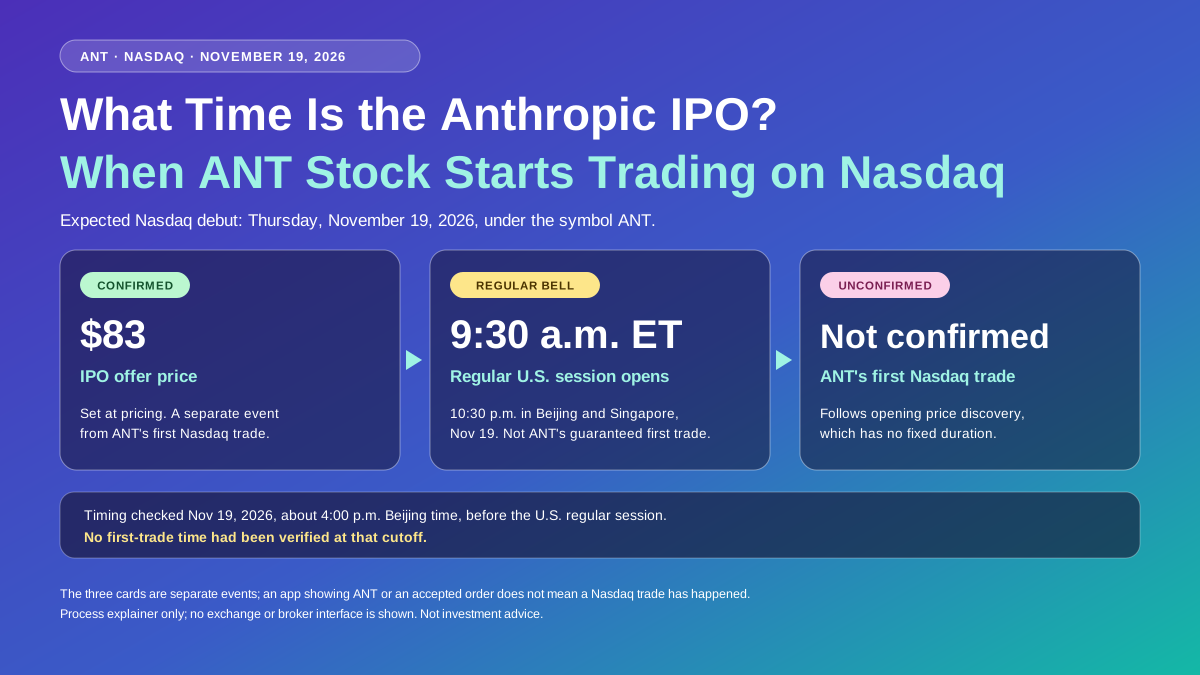
What Time Is the Anthropic IPO? When ANT Stock Starts Trading on Nasdaq
What time is the Anthropic IPO? Check ANT’s November 19 Nasdaq debut, global opening-bell times, the $83 offer price, and why orders may stay pending.

Samsung SDS Unveils Technology for Controlling KRW Stablecoin Issuance and Remittance Qualifications

Invesco moves stablecoin reserves on-chain, but hides a liquidity gap

xAI Requests Appeals Court to Block California AI Disclosure Law

Brazil's Central Bank Draws Line on Stablecoin Remittances, Concerned About Customer-Owned Overseas Transfers

Do Withdrawal Addresses for Cryptocurrency Change Even on Legitimate Websites? Lessons Learned from OptimJack

Further Arrests in the Zondacrypto Scandal. Prosecutor Talks About Three Individuals

CFTC puts tokenization and margin on Dec. 15 trading agenda
US Supreme Court Turns Down Custodia Bank Appeal Over Federal Reserve Master Account
Italy's Deficit Expected to Meet Targets, May Exit Special Oversight Next Year

Grvt Launches RWA Perpetual Contracts Linked to Traditional Market Financing Costs
Is There a Risk of Uncontrolled Access to Hyperliquid API Wallet Permissions? Itemized Permission Control May Be the Solution

Circle Expands Disparte and Walia Roles as Stablecoin Operations Scale
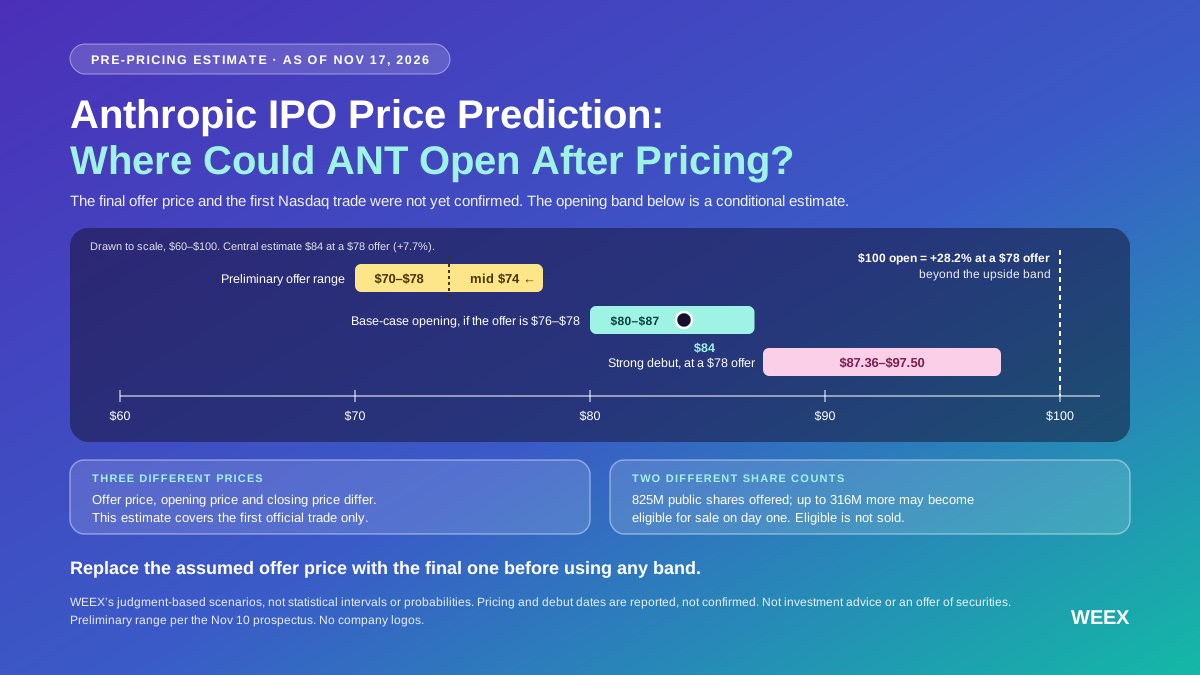
Anthropic IPO Price Prediction: Where Could ANT Open After Pricing?
Anthropic IPO price prediction: See ANT’s $80–$87 base-case opening range, how the final offer price changes it, and what could push shares above $90.

Will the $50 billion request materialize? The U.S. transportation system urgently needs funding for upgrades, but Congress has become a "lame duck"

Dragonfly Leads NEAR Seed Round Financing After Initially Rejecting Investment Request

Plaintiffs Request Sanctions Against Meta, Claiming About 93% of Reviewed Documents Were Improperly Withheld

$LIBRA: One of the defendants seeks to remove Judge Ledesma and halt the review that could reactivate the case

OpenAI Partners with Four Organizations for AI Safety Assessment

U.S. Supreme Court rejects Custodia appeal on Fed master account

Trezor found implants in reseller wallets. What protects the buyer?
Crypto: Netflix Series on FTX Sparks Reactions from CZ and Vitalik Buterin
Ethereum Developers Change Gas Calculation Method
Bitcoin Core Fixes Node Blocking Vulnerability CVE-2026-117348
Apple Wins User Data Lawsuit in the UK
Flowdesk sees repo driving tokenized equities after Anthropic’s IPO
Safe Launches Multi-Chain Queue Service, Old API to Be Shut Down on January 19, 2027
Latest articles


Latest coin listings on WEEX


